
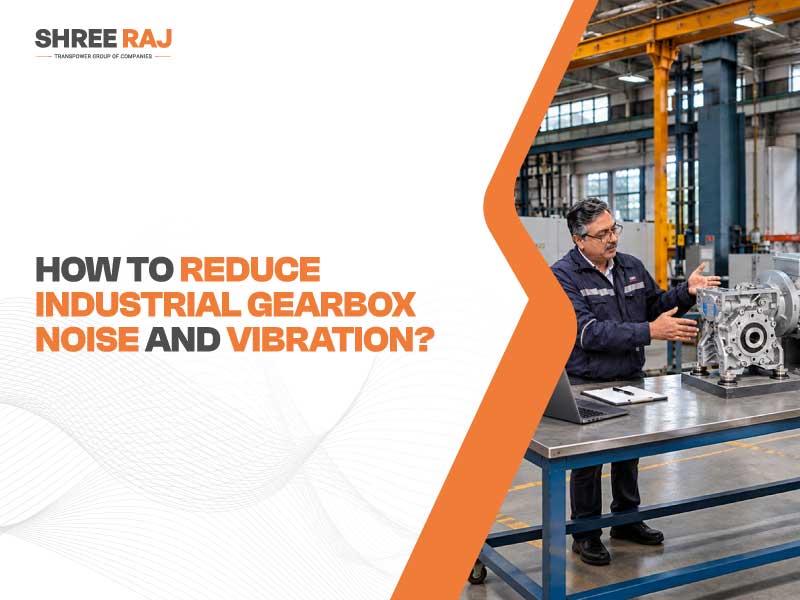
In industrial gearboxes, noise and vibration may be the initial symptoms of misalignment, wear in gears, bad lubrication, or loose mountings. It is always better to solve such problems in due time in order to avoid unexpected machine failure, save on repair expenses, and extend the life span of the gear box. Proper checking and installation of gear boxes are effective methods for industrial plants in Ahmedabad and throughout Gujarat.
An industrial gearbox is a device that passes on the mechanical energy from a motor to other equipment being driven by the motor. While running, the gears, shafts and bearings will be subjected to mechanical load and some level of noise is acceptable. Any abrupt change in the noise should therefore be addressed.
Some of the possible sources are as follows:
Misalignment of the shaft: If there is poor shaft alignment, additional forces act on the bearing and the coupling leading to vibration, noise and premature wear.
Poor lubrication: Insufficient oil, contaminated oil or wrong type of oil can increase the friction between the parts hence whining, grinding or overheating.
Worn out gear or damaged teeth: The teeth on the gear can become worn due to continuous use, overloading or poor lubrication and damaged teeth will lead to repeated clicking noise.
Faulty bearings: Bearing that are worn or damaged will result in humming, rumbling or high vibration noise.
Loosely mounted bolts: Poorly fitted bolts, uneven foundation or a weak foundation will make the gearbox vibrate when in use.
Overloading: Overloading a gearbox will put additional stress on the gears, shafts and bearings.
Identifying the cause is more useful than simply trying to reduce the sound. Noise and vibration are symptoms; the underlying mechanical issue needs attention.
Improper alignment is another cause of vibration in motor-driven gearbox assemblies. Misalignment, even slightly, can increase the load on bearings and couplings.
When installing and maintaining, check both angular and parallel misalignment. Using an indicator or laser measuring tool can assist in achieving proper alignment measurements. Follow the specifications given by the coupling and gearbox manufacturers for the tolerances of their products.
The process of lubrication minimizes friction between the gear teeth and helps prevent bearing wear. The wrong selection of oil and low levels of oil can result in increased temperatures and noise levels.
Adhere to the manufacturer’s guidelines concerning the lubricant used, its viscosity and replacement period. During the inspection process, check for:
Do not select gearbox oil based only on availability. The correct lubricant depends on the gearbox design, operating speed, load and temperature.
Faulty teeth and worn bearings may cause noise and vibration. If the gearbox suddenly starts making a grinding, knocking, or rumbling noise, it would be wise to conduct an inspection rather than continue operating without determining the cause.
The maintenance crew needs to check for any visible damage on the gears and bearings, excessive heat, and metal chips in the oil. The internal inspection and/or replacement of the bearings must be done by professionals based on the manufacturer’s recommendations.
The gearbox should be installed on a firm surface. Vibrations will result from loose foundation bolts, uneven installation or inadequate spacing between the foundation and the mounting base.
Foundation, installation bolts, base plate, and support structures should be inspected as part of regular maintenance. Bolts should be tightened according to specifications. Uneven mounting should be corrected if found. The foundation should be repaired if faulty.
Each industrial gearbox is manufactured to work within specific ratings of power, torque, speed, and duty cycle. Overloading the gearbox above its ratings will result in higher loading on gear teeth, bearings, and temperature.
Prior to choosing or replacing the gearbox, make sure you know the power of the motor, speed of the output shaft, torque requirement, service factor, and duty cycle. In applications like conveyor, mixer, and material handling, the load will vary, hence the gearbox should be chosen based on duty cycle and not motor power alone.
Continuous monitoring enables maintenance staff to detect any changes that might lead to serious malfunctions. Log operating noise, vibration levels, temperatures, as well as any changes in load or speed.
For appropriate industrial gear units, vibrations could be measured at the bearing housing and at other designated measuring points using the right equipment. Sometimes comparing results from repeated measurements proves to be more effective than a single measurement.
ISO 20816-9:2020 sets standards for the measurement and evaluation of vibration in some enclosed gear units. The applicability of the standard should be verified first.
Waiting for the failure of the gearbox is likely to cause production stoppage and incur more expenses in terms of repairing. Maintenance will allow workers to detect issues with lubrication, fastener looseness, unusual temperature, and the beginning of wear.
The frequency of inspections ought to be determined based on the manufacturer’s recommendations, operating hours, loading, and working environment. Dusty, hot, and always running industries may require extra care.
Different sounds and vibration patterns can point maintenance teams towards different possible problems. However, sound alone cannot confirm a fault. Inspection and measurement are needed before deciding on corrective action.
Noise or vibration symptom | Possible cause | Recommended action |
High-pitched whining | Gear meshing or lubrication issue | Check oil level, lubricant condition and gear condition |
Grinding noise | Gear or bearing wear | Inspect internal components |
Repeated knocking | Damaged gear teeth or loose components | Stop and inspect the gearbox |
Excessive vibration | Misalignment or loose mounting | Check coupling alignment and foundation bolts |
Rumbling sound | Possible bearing damage | Inspect bearings and lubrication |
Noise that increases under load | Overloading or gear damage | Verify operating load and inspect the drive |
This table is a troubleshooting guide, not a fault diagnosis. A qualified technician should confirm the cause before repairs or component replacement.
A basic inspection procedure may assist the maintenance crew in monitoring the health of the gearbox. The following items can be recorded in the maintenance manual of the plant:
Have professional inspection done if there is an increase in noise or vibration levels.
A gearbox doesn’t always have to be replaced because of noise; some problems like improper fastening or misalignment can be fixed without replacing the gearbox.
But replacement may become necessary where there is considerable wear on the gear teeth, frequent bearing failures, cracks in the casing or the cost of repairs is just not viable anymore. A new gearbox will have to be suited for the application in terms of torque, speed, mounting, shaft arrangements, and duty cycle.
For old machines, it would be wise for the engineers to look at whether the existing gearbox is the right fit for the present production requirements or not.
The first step towards reducing noise and vibrations is to choose a gear box which suits your machinery requirements. While ordering, buyers must ensure they verify power rating, torque, gear ratio, input speed, mounting position, service factor, and operating environment.
For any manufacturing plant based in Ahmedabad and Vatva GIDC, it makes sense to partner with an expert industrial supplier who can guide buyers on selecting suitable products. The Transpower Group includes Shree Raj Traders that deal in industrial products catering to manufacturing plants.
You may also want to check out other products like industrial motors and industrial switchgear.
It is always wise to never overlook noise and vibration in an industrial gearbox, especially for those located in manufacturing plants that could cause disruption to the process due to equipment failure. Proper alignment, lubrication, inspection, and correct loading can be done to minimize unnecessary wear on the gearbox.
If you are looking for industrial gearbox and power transmission products in Ahmedabad, get in touch with Shree Raj Traders.
WhatsApp us